Nuvoic TechAbility Ian Karten Charitable Trust
Skip to Content
login
karten Network Logo

Supporting organisations working with disabled people

  • Home
  • About Us
    • Introduction
    • Trustees
    • Support Team
    • Minutes of Board Meetings
    • Karten Centre DVD
  • Research
  • Centres
    • Karten Centre Search
    • All Centres
    • Eire
    • England
      • East Midlands
      • East of England
      • London
      • North East
      • North West
      • South East
      • South West
      • West Midlands
      • Yorkshire and The Humber
    • Israel
    • Northern Ireland
    • Scotland
    • Wales
    • Success Stories
    • Equipment Donation
    • Apply for support
  • News
    • Newsletters
  • Resources
    • Mobile Technology Resource
    • eSafety
    • Useful links
    • Webinars
    • Talent and Technology Report
    • Audio Books
    • Event Handouts
  • Job Vacancies
  • Events
  • Contact Us
  • Home
  • About Us
    • Introduction
    • Trustees
    • Support Team
    • Minutes of Board Meetings
    • Karten Centre DVD
  • Research
  • Centres
    • Karten Centre Search
    • All Centres
    • Eire
    • England
      • East Midlands
      • East of England
      • London
      • North East
      • North West
      • South East
      • South West
      • West Midlands
      • Yorkshire and The Humber
    • Israel
    • Northern Ireland
    • Scotland
    • Wales
    • Success Stories
    • Equipment Donation
    • Apply for support
  • News
    • Newsletters
  • Resources
    • Mobile Technology Resource
    • eSafety
    • Useful links
    • Webinars
    • Talent and Technology Report
    • Audio Books
    • Event Handouts
  • Job Vacancies
  • Events
  • Contact Us

CPotential

Posted on April 16, 2026 at 5:49 pm.

Written by martin

CPotential logo. A teal circular icon with a spiral motif sits to the left of the text 'CPotential' in dark navy, with the words 'we do' beneath in orange.

Early Intervention Pathway for 0-2s — Supporting Families Early

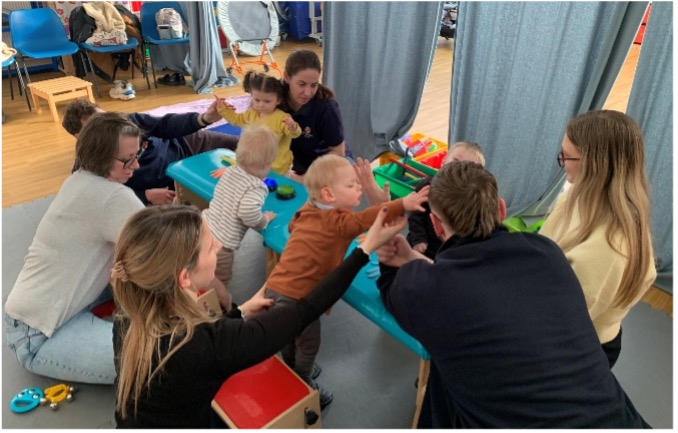
A group of adults and young children sit together on the floor in a bright, welcoming room. A therapist or practitioner engages closely with the children while parents observe and participate. Colourful toys and soft furnishings are visible in the background.

CPotential in North London are proud to launch their Early Intervention Pathway — a heavily subsidised therapy support programme for families with children aged 0–2 years who are experiencing early developmental challenges.

Why it matters

The first years are a time of rapid growth. Early support can make a lasting difference — helping children reach their potential and giving families confidence and practical help at the right time.

What’s included:

  • Early Milestones Telehealth Discussion — supportive online session with a senior clinician
  • Intensive Therapy Pathway (or regularly across 8-12 weeks) — led by expert Conductive Education & Music Therapy tailored to your child
  • Family Wellbeing Support — wellbeing coaching, parent networks, and dedicated support from a Family Support Manager
  • Legal, Financial & Educational Guidance — free consultation with supporters Slater and Gordon and Irwin Mitchell
  • Heavily subsidised costs — £45 for initial assessment; £10 per session (£120 for 12 weeks)

Learn more and apply: https://cpotential.org.uk/our-services/early-intervention-pathway-for-0-2-year-olds/

Nurturing Notes — a FREE Music Therapy Group for NICU Graduates

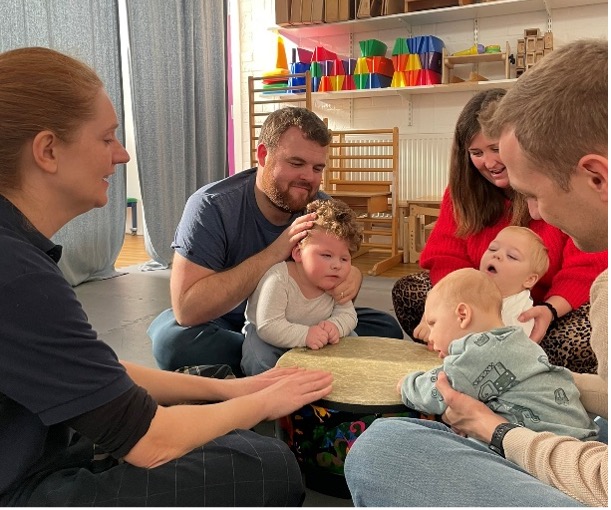
Four adults sit closely together on the floor, each holding or interacting with a baby. The group faces inward, creating an intimate circle. The setting appears warm and relaxed, with colourful resources visible in the background.

Their inclusive Nurturing Notes group is a fully funded music therapy programme for babies who have graduated from neonatal care, offering:

  • Joyful, sensory‑rich music sessions
  • Early communication & emotional connection
  • A supportive space for parents to connect with each other, and bond with their child

Find out more https://cpotential.org.uk/our-services/nurturing-notes-music-therapy-group-for-nicu-graduates/


AICAN: making AI accessible

Posted on April 16, 2026 at 5:49 pm.

Written by martin

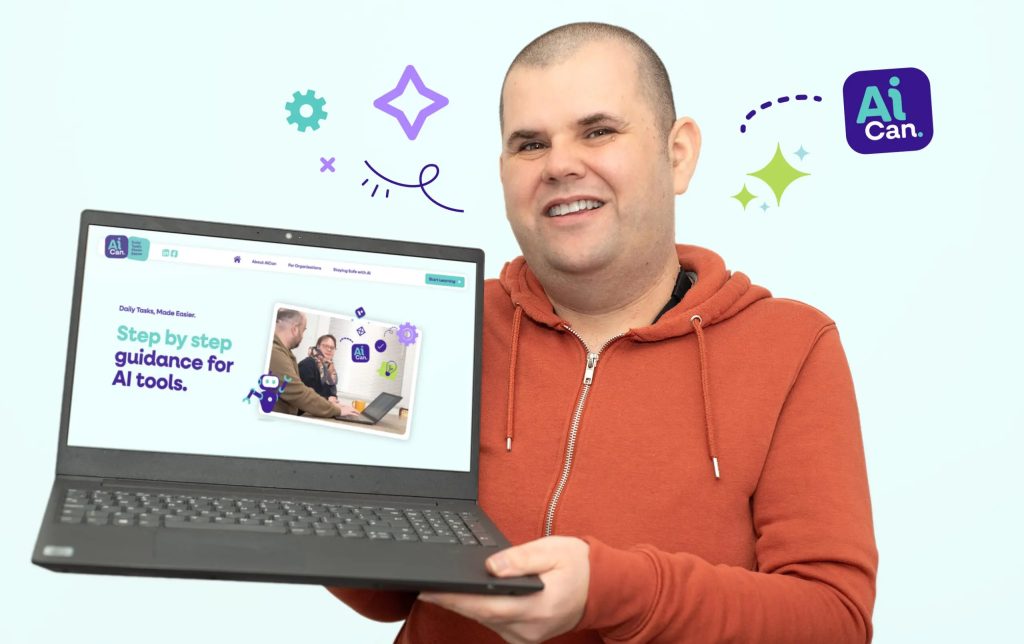
Matt Leadbeater, a smiling man wearing an orange zip-up hoodie, holds a laptop open to the AI CAN website, which displays the text "Step by step guidance for AI tools.

A new training programme has recently launched to help autistic people and people with learning disabilities use AI tools safely, confidently, and independently.

The AI CAN initiative is a peer-led training programme and digital hub developed by The Pro-Active Community, in partnership with Active Prospects and researchers from the University of Surrey. The project is funded by the Department for Science, Innovation and Technology.

AI CAN is designed to support people in using generative AI tools such as ChatGPT and Copilot in everyday life. This includes practical tasks like writing emails, planning meals, understanding online information, and creating accessible, easy-read content. A key focus of the programme is online safety, helping users understand how to use AI responsibly, recognise potential risks and protect their personal information.

Training is also provided for support workers, equipping them with the knowledge and confidence to use AI safely in their roles and to better support the people they work with.

The project was inspired by Matt Leadbeater, who found that AI transformed how he communicates and manages day-to-day tasks. “The words were still mine, but AI helped me shape them clearly and confidently,” he said. “It wasn’t just helping me work better – it was helping me live more independently.”

Early research highlights strong demand for this kind of support, with 93% of participants saying they want training to help them use AI safely and confidently. The biggest barrier identified was a lack of knowledge and understanding, rather than a lack of interest.

Launched in March 2026, AI CAN aims to ensure autistic people and people with learning disabilities are not left behind as AI continues to shape how we live and work. For more information on training opportunities or resources contact: hello@proactivecommunity.org.uk


Technology Serving Inclusion: AI and Human Partnership in Accessibility

Posted on February 23, 2026 at 9:20 pm.

Written by martin

Using Captions and Transcription to Enable Inclusive Learning

Vision and Values

The Ono Academic College has committed itself to creating meaningful change within Israeli society.” Guided by this vision, the Centre for Academic Support and Accessibility is advancing innovative solutions that promote equal participation for students with disabilities in higher education.

The Challenge: Deaf and Hard of Hearing Students in Academia

Deaf and hard of hearing students face significant barriers in academic environments, including difficulties accessing spoken lectures, reliance on human-mediated support, limited availability of captioned recordings, and inconsistent transcription quality. These challenges are particularly evident in content-heavy courses and discussion-based teaching.

Identifying the Need

The pilot initiative emerged in response to direct requests from students who require accurate and accessible captions, especially for recorded lectures, as a foundation for comprehension, revision and independent learning.

The Solution: A Hybrid Human–AI Approach to Captioning

The Centre for Academic Support and Accessibility at Ono Academic College has launched a pilot based on a hybrid model that combines AI-generated captions with human refinement. While AI enables fast and scalable access to lecture captions, human involvement ensures accuracy, clarity and sensitivity to the linguistic and academic complexity of Hebrew. This approach reflects a core value of accessibility work: technology serves inclusion most effectively when it is guided by human expertise, responsibility and commitment to equal participation for all students.

Benefiting Wider Student Populations

Beyond deaf and hard of hearing students, AI-generated captions can support students with attention deficit disorders and those studying in Hebrew as a second language, enhancing focus, comprehension and retention of academic content.

Technology as a Tool for Social Inclusion

The integration of AI into accessibility practices reflects not only technological innovation, but a broader social commitment: reasonable adjustments are a prerequisite for equal participation in higher education.

Implementation Challenges

Alongside its significant potential, the implementation of AI-based captioning presents several challenges:

Technical infrastructure

Research in speech recognition consistently demonstrates that audio quality is a key determinant of transcription accuracy. Microphone quality, lecturer proximity, and background noise levels all directly affect system performance.

Collaboration with academic staff

Effective optimisation requires close cooperation with lecturers, including awareness of clear pronunciation, appropriate speaking pace, consistent terminology, and minimising overlapping speech. Such practices substantially improve automatic captioning outcomes.

Linguistic challenges in Hebrew 

Hebrew presents unique linguistic barriers for AI-based speech recognition, particularly in academic contexts. Its lack of written vowelisation, frequent homophones and rich morphology increase transcription error rates, especially when specialised terminology is used. As a low-resource language in speech processing, Hebrew requires systems to infer pronunciation and meaning from context alone, making automated captioning more sensitive to speaking style, audio quality and domain-specific language.

Current solutions and human refinement

To address these challenges, many systems adopt a human-in-the-loop approach, combining AI-generated captions with post-editing or quality control by trained human reviewers. Human refinement enables correction of linguistic ambiguities, specialised terminology and contextual errors, significantly improving accuracy and usability. While this hybrid model enhances quality, it also highlights the continued importance of professional expertise alongside technological innovation.

Looking Ahead

This pilot represents an initial step towards broader adoption of AI-based accessibility tools. By combining technological innovation with human expertise and institutional commitment, Ono Academic College continues to advance inclusive excellence and equal opportunities in academia.

References

Turetzky, A., Tal, O., Segal-Feldman, Y., Dissen, Y., Zeldes, E., Roth, A., Cohen, E., Shrem, Y., Chernyak, B. R., Seleznova, O., Keshet, J., & Adi, Y. (2024). HEBDB: A weakly supervised dataset for Hebrew speech processing. Retrieved from https://pages.cs.huji.ac.il/adiyoss-lab/HebDB/


The Royal Society’s Disability Technology Report Parliamentary Launch

Posted on November 7, 2025 at 11:08 am.

Written by martin

I had the privilege of representing the Karten Network at the parliamentary launch of The Royal Society’s report, Disability Technology, hosted in partnership with Policy Connect and Steve Darling MP at the House of Commons. The breakfast reception brought together policymakers, technologists, researchers, and disabled people to explore how the UK can strengthen access to assistive technologies and digital inclusion for the 16.1 million disabled people across the country.

Martin Pistorius, smiling in a suit and tie, sitting in his wheelchair in front of Big Ben and the Palace of Westminster in London on a cloudy day.

The event opened with remarks from Steve Darling MP, Liberal Democrat Spokesperson for Work and Pensions, who welcomed attendees and emphasised the importance of improving access to assistive technologies.

He was followed by Professor Sir Bernard Silverman FRS, who chaired the report committee and presented the key findings of The Royal Society’s Disability Technology report. He reminded delegates that “the best ideas arise when those who are most affected shape the solutions,” highlighting the need for genuine co-design and collaboration with disabled people.

Professor Sir Bernard Silverman FRS speaking at the launch of The Royal Society’s Disability Technology report at the House of Commons. He stands at a lectern beside a Royal Society banner, while panellists, including a wheelchair user, are seated behind him. A guide dog rests on the floor in the foreground.

Next, Sir Stephen Timms MP, Minister of State for Social Security and Disability, spoke about the opportunities technology can offer to disabled people, while acknowledging the continued need to raise awareness and availability of assistive technologies.

Sir Stephen Timms MP, Minister of State for Social Security and Disability, speaking at the launch of The Royal Society’s Disability Technology report at the House of Commons. He stands at a lectern beside a Royal Society banner, with panellists seated behind him and a guide dog resting on the floor in the foreground.

The final speaker, Professor Annalu Waller OBE FRSE, Professor of Human Communication Technologies at the University of Dundee, drew attention to the progress that has been made in accessibility but also to those who remain excluded. She spoke passionately about the need to include people with severe and complex disabilities, particularly those with profound intellectual disabilities, in conversations about technology. She explained that “they first need the skills to participate, and then they need to be included, even if that is as simple as being able to say, ‘I like this,’ or ‘I don’t like that.’”

Professor Annalu Waller OBE FRSE speaking at the launch of The Royal Society’s Disability Technology report at the House of Commons. She is seated in a power wheelchair with a microphone, addressing attendees beside a Royal Society banner. A guide dog rests on the floor in the foreground.

The Royal Society’s Disability Technology report is the culmination of two years of research, drawing on insights from more than 800 disabled people and 2000 members of the public across the UK, US, India, and Kenya. It makes a compelling case for viewing assistive technology as a fundamental part of digital inclusion and innovation, not an afterthought. Among its recommendations are recognising smartphones as assistive technology, on par with hearing aids, manual wheelchairs, or white canes, and ensuring analogue alternatives remain available to prevent digital exclusion.

It was encouraging to see so many people from across policy, academia, and industry working to advance accessibility and inclusion.

Read the Royal Society’s Disability Technology report.


Royal Society Launches Landmark Disability Technology Report

Posted on July 17, 2025 at 12:07 pm.

Written by martin

I had the privilege of attending the Royal Society’s launch of its Disability Technology report last month, a thought-provoking and, at times, deeply personal event that brought together policymakers, technologists, researchers, and disabled people to reflect on where we are and where we need to go.

Martin Pistorius in a light blue shirt takes a selfie outside a grand cream-colored building with tall windows and black railings. The sky is blue with scattered clouds. The setting is The Royal Society in London.

The evening opened with powerful remarks from Professor Alison Noble, who reminded us that disability is a universal human experience, something every person will encounter in some form over their lifetime. That perspective was carried through the evening: disability not as an exception, but as part of what it means to be human.

It began with time to explore a range of fascinating exhibits, from the Google Accessibility Discovery Centre, EyeHarp, and Waymap, to Auracast, Blind Ambition, and an immersive installation by artist Christopher Samuel. There was also space to connect with others working across disability and technology, and to pause and reflect on the scale and depth of the challenges ahead.

A panel of six speakers sits on stage at The Royal Society during the launch event for the "Disability Technology" report. Behind them, a large screen displays the report’s title and tagline: "How data and digital assistive technologies can support independent, fulfilled lives." A QR code and Wi-Fi information are shown, and the vibrant background features glowing neural-like imagery in purple and pink tones, also seen on the report cover displayed on the right.

This was followed by the formal launch of the report, beginning with a short film and a presentation outlining its key findings. A powerful panel discussion rounded out the evening, offering diverse perspectives on the current state of disability technology and where we need to go next.

At the heart of it all was the report itself: Disability Technology, the result of two years of research, including interviews with 800 disabled people, 2,000 members of the public, and insights drawn from the UK, US, India, and Kenya. If you missed the event, I encourage you to watch the recording, or explore the full report. For those who find listening easier, an audio version is also available.

The report makes a clear and compelling case that disability technology isn’t, and nor should it be, an afterthought. It is a core part of digital inclusion, economic participation, and innovation. It calls for better data, more inclusive design, and greater investment in assistive technology.

One recommendation that especially stood out to me was the call to recognise smartphones as assistive technology, on par with hearing aids or white canes. As someone who uses mobile tech every day to communicate, access information, and navigate the world, I was pleased to see this acknowledged. I’d love to see this extended to tablets as well. For many people, especially those using devices like the iPad with alternative input methods or larger screens, they’re no less vital.

Another theme that resonated was the role of policy. One panellist observed that digital exclusion is not just a failure of design, it is a failure of policy too. Designing for inclusion is not enough if the systems around that design don’t support access, funding, or awareness.

A panel discussion at The Royal Society on Disability Technology, with six speakers seated on stage beneath a projected slide listing their names. A British Sign Language interpreter stands to the left, mid-gesture. The screen behind them displays the event branding and a visual of neural-like digital art. Live captions are visible above the slide.

Professor Annalu Waller closed the evening with words that lingered long after the panel ended: “We need to inculcate in every person the understanding that disability is not abnormal, but part of being human. Everyone, at some stage, will be disabled. So we need to give them a voice and not write them off.”

There is still a long road ahead, but this felt like a significant and hopeful moment, not just in highlighting challenges, but in pushing the conversation toward action. The Royal Society and others have stressed that we must now reframe how we value assistive technology, recognising its role in everyday life, not just as specialist tools, and ensuring equitable access through inclusive research and policy. The report also emphasises that disabled people must be meaningfully involved from the outset of any design process. The challenge now is to ensure that momentum carries forward, that disability technology is not just discussed, but prioritised, invested in, and embedded across the digital future.

Martin Pistorius
Karten Network Technology Advisor


MSc Educational Assistive Technology is now recruiting

Posted on November 26, 2024 at 2:19 am.

Written by martin

Would you like to learn about the assessment, provisioning, ongoing support, and review of Assistive Technology?

MSc Educational Assistive Technology is now recruiting its 5th cohort to start in January 2025.

The MSc in Educational Assistive Technology (EduAT) is a globally unique course that aims to train students to work as an Assistive Technologist. This distance learning course is being offered by the University of Dundee. The course is currently the only Assistive Technology (AT) focussed MSc offered from the UK. We are training individuals to assess for, implement and support the use of technology within education and beyond to enable AT users with a broad range of learning difficulties and/or physical disabilities to access the curriculum or be as independent as possible. We are also working to support the professionalisation of the Educational Assistive Technologist role.

The course was founded in 2021 by Professor Annalu Waller OBE, and Mr Rohan Slaughter, who were joined by Dr Tom Griffiths in 2023. The programme team have extensive experience of working with and teaching individuals with a wide range of disabilities, and together we have over 80 years’ experience in AT.

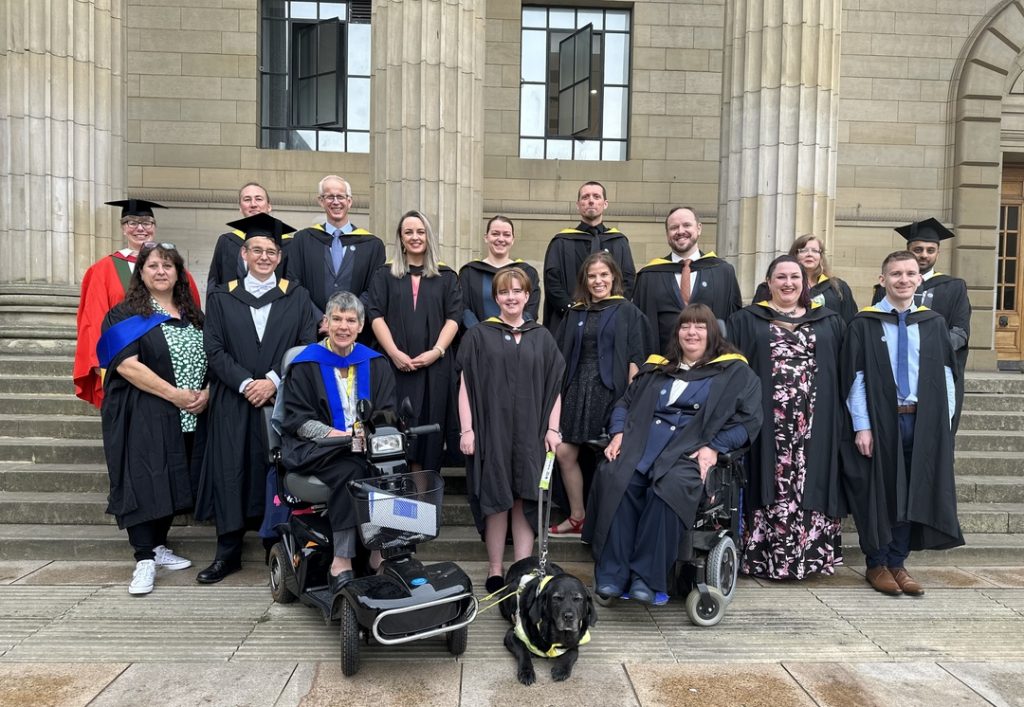
The first cohort of the Educational Assistive Technology course posed in graduation gowns on the Caird Hall steps

The degree differs from previous Assistive Technology MSc programmes due to its focus on the assessment and support of electronic assistive technology within educational, social care, health, and other environments, or in other contexts that embed lifelong learning. It is aimed toward teachers, therapists, technologists and others who are seeking to develop and enhance their ability to support those who require Assistive Technology (AT). Our students work in schools, colleges, universities, social care, and health organisations. We welcome applications from people who have experience of working to support disabled people and students in a variety of contexts, inclusive of those who may not hold higher qualifications, and who do have useful practical experience. The entry requirements for the course have been designed to be as inclusive as possible.  

The degree has been designed as a distance learning part-time course taken over two years. To undertake the two-year part-time programme, students must be employed in a suitable working context in which they can undertake the MSc EduAT coursework. A full-time version is also available, and this would require placement opportunities to be arranged, please contact a member of the programme team if you are interested in this route. Please note that we cannot organise work placements in countries other than the UK, as we cannot quality assure such placements.

  • If you want to know more about the MSc in Educational Assistive Technology (MSc EduAT) the course pages on the University website is the place to start.
  • A recording is available of our 2024 open afternoon, current students and graduates give their views on the course at 1:03 in the recording.
  • You can read about our first cohort who graduated in 2023 in this press release. Our second cohort just graduated in June 2024.
The second cohort of the Educational Assistive Technology course posed in graduation gowns on the Caird Hall steps

To apply for the programme, visit the MSc EduAT websites for part-time / full-time study. You can also contact us directly by email: MScEduAT@dundee.ac.uk   


MSc Educational Assistive Technology Celebrates the Graduation of the Class of 2024!

Posted on July 18, 2024 at 8:08 am.

Written by martin

The second cohort of MSc EduAT students graduated on the 18th of June 2024. The group crossed the Caird Hall stage with other students graduating from the School of Science and Engineering.

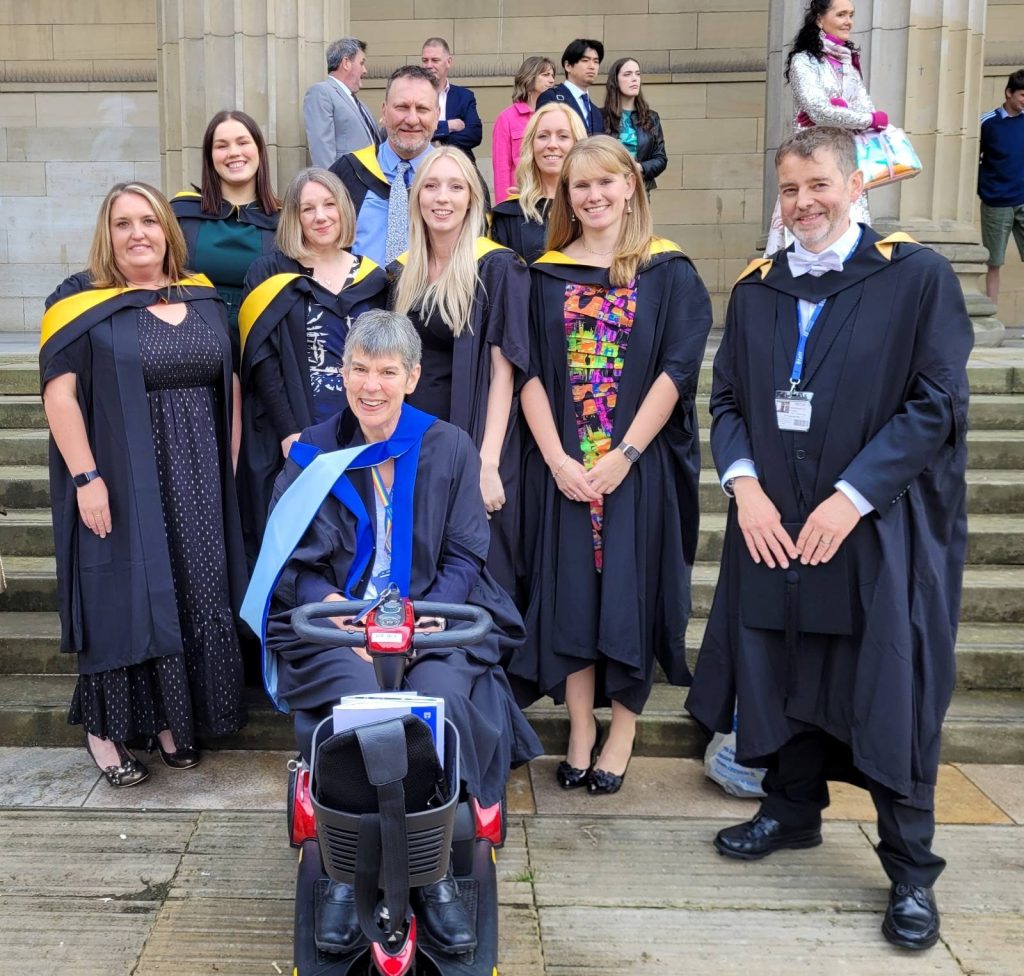
Group of MSc EduAT graduates with programme leads, Rohan Slaughter and Annalu Waller taken on the Caird Hall steps following the 2024 graduation ceremony

The programme team are very proud of our graduates, all members of the group undertook project dissertation work that directly improved the provision of Assistive Technology services in the organisations they work within. Examples of project work included a review of how students who are deaf or hard of hearing accessed assistive technology support in a higher education organisation, evaluating the effectiveness of training and support for teachers to write high quality AT goals and targets in a specialist college context, an investigation as to the suitability of mainstream environmental controls in a specialist college and evaluating the requirements for and impact of assistive technology training in a special school. Other work focussed on assistive technology for literacy, developing switch access skills and the inclusion of virtual reality technology in a special school.

The graduating group work in specialist schools and colleges and in higher education. The MSc EduAT is taken by students who work in specialist and mainstream schools and colleges, including general further education colleges and in higher education organisations. Students are also employed in private AT practice, in social care and third sector organisations and in health contexts. This broad range of professional experiences results in dynamic cohorts who are drawn from education and teaching, health and therapy and various technology-based roles. The EduAT programme team have found that the cohorts develop as self-directing learning groups who support each other cohesively and provide a valuable supportive professional context to each other, this is seen as a very respected outcome alongside developing new knowledge and skills in assistive technology.

The course has been designed to support students to learn about the assessment, provisioning, ongoing support, and review of Assistive Technology in a range of contexts.

You can find more information about this predominately distance learning programme on the MSc in educational assistive technology dedicated website. 

You can read about our first cohort who graduated in 2023 in this press release. Our second cohort graduated in June 2024.

If you have any questions, or would like to find out more about the course, please email MScEduAT@Dundee.ac.uk


Developing accessible speech technology with users with dysarthric speech

Posted on April 18, 2024 at 8:36 pm.

Written by martin

A Nuvoic project participant sitting, holding a mobile phone in his hand. A project team member sitting beside him, explaining how to use the Voiceitt app

The Karten Network team has recently had a paper published in Assistive Technology, The Official Journal of RESNA.  The paper describes the Nuvoic project methodology and how we worked with disabled participants and software developers to improve the functionality and performance of Voiceitt.  The Voiceitt app is designed for people with dysarthric speech, to support vocal communication and access to voice-driven technologies. Sixty-six participants were recruited to test the Voiceitt app and share feedback with developers. You can read the full paper here Developing accessible speech technology with users with dysarthric speech


How an Accessibility Passport can enable us to live independently

Posted on September 18, 2023 at 12:28 pm.

Written by martin

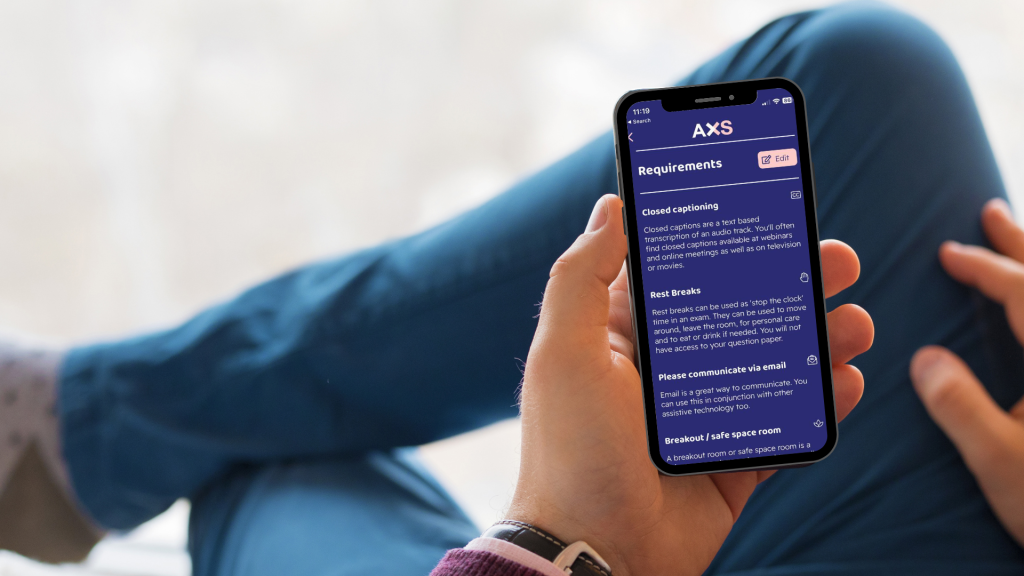
A man sitting, holding a mobile phone. The AXS Passport form is displayed on his phone.

Have you ever filled out an accessibility or adjustments passport? It’s a format disabled people often know all too well; you’re sent a word document for you to list your diagnoses, fill in some text boxes with your most personal, private information, and then send it into someone else’s inbox, not knowing where it might end up, or what will happen as a result.

Accessibility passports should be designed to enable disabled people, to break down the barriers that prevent us from accessing our education, work, and lives. And yet, in reality, they often present us with more barriers, such as:

  • Cognitive barriers, like trying to understand what we’re being asked of with vague questions of “what do you struggle with at work?”
  • Emotional barriers, like feeling vulnerable about being asked to share very intimate information with business owners, managers or coworkers
  • Digital accessibility barriers, like filling in PDF documents that aren’t compatible with our screen reading software.

Diversity and Ability’s team of disabled and neurodiverse inclusion experts have the solution: AXS Passport. AXS Passport heralds a new, inclusive approach to passports, with a digital tool that gives everyone the opportunity to share their needs in the way that feels best for them, all while maintaining ownership of their own data.

Using AXS Passport involves signing in via the website or app and simply ticking off the requirements that fit you. It’s specifically designed to include everyone, regardless of whether you identify as disabled or not. You have the ability to share everything from dietary needs, to caring responsibilities, to physical access requirements, all on one digital platform. Plus, it’s completely free for individuals to sign up; create your AXS Passport now!


Natasha Kassir – communication partner

Posted on September 18, 2023 at 12:28 pm.

Written by martin

A graphical depiction of Natasha Kassir

Hello everyone, I’m Natasha Kassir.

I would like to offer my time and skills as a communication partner to anyone who would like the chance to chat with me via video or voice call, including people who use alternative and augmentative communication (AAC).

I have a keen interest in technology, especially AAC, and in helping other disabled people. I have experience of working as a teaching assistant with people who use communication aids such as communication boards, sign language, and symbol systems.

I’ve also worked as an advocate, helping disabled people to speak up for themselves. Being disabled myself I understand the difficulties that people may have expressing themselves and the struggle it can be.

If you feel I could support your team in any way, please email dawn@karten-network.org.uk and she will put you in contact with me. I would be happy to arrange regular or one-off calls with individuals or groups. I have DBS approval to work with vulnerable adults.

Please note

The Karten Network is happy to introduce Natasha but can take no responsibility for anything thereafter.  It is the organisation’s responsibility to make relevant employment checks in line with their policy and to put plans in place for any support provided.


teamSOS: Elevating care in organisations serving People with disabilities

Posted on September 18, 2023 at 12:25 pm.

Written by martin

If you’re involved in an organisation that serves people with disabilities, you’re already aware of the intricate landscape of individual needs and adaptive solutions – and the amazing array of solutions brought forward by innovators looking to make life easier for people with disabilities and those who provide care and support to them.

Today we’d like to share our modest (yet revolutionary!) contribution to these efforts with our affordable and all-device accessible app that puts help in the hands of all staff. teamSOS brings invaluable efficiencies to organisations that support individuals with complex needs, providing a streamlined way for organisations to manage, respond and resolve incidents in real-time.

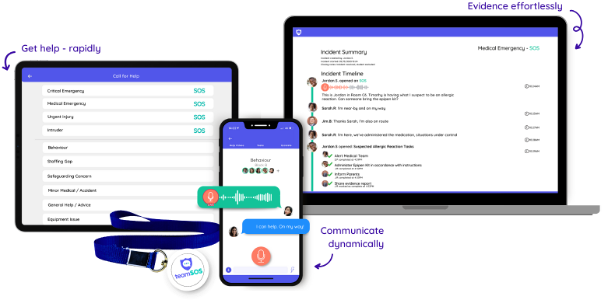
Screen examples of the teamSOS system on a tablet, mobile phone, and computer

Incident Management: More Than Just Emergencies

The term “incident management” often brings to mind crisis scenarios or immediate medical needs. While these are undoubtedly part of the picture, teamSOS offers so much more than that – offering a streamlined solution to manage every-day interests and concerns. From staffing gaps, to safeguarding concerns, behavioural issues, or medical emergencies, teamSOS is robust enough to handle it all and support and empower staff members every step of the way. 

The Advantages Unveiled

Your Organisations Command Centre

Accessible on all devices, teamSOS’s home screen offers a simple, customised interface with one-tap buttons that empower staff to reach the right team in seconds. Our customisable categories allow institutions with complex or unique requirements to adapt the system to their needs, whether that’s behavioural monitoring or tracking therapeutic interventions. We also offer discreet smart buttons for an alternative way to get help fast. For urgent situations, escalation failsafes are built-in so that staff are never left un-heard. 

Real-Time Communications

Gone are the days of squawking walkie-talkies, 1-way alerts or co-ordination calls to the office. teamSOS equips all users with innovative tools like live-audio broadcasting to facilitate real-time support and effective collaboration – whether it’s coordinating paraeducators or alerting the healthcare team for a medical emergency, the lines of communication are always open.

Support In-The-Moment

During an incident, teamSOS automatically pulls up your organisation’s relevant guidelines or protocols. For organisations dealing with complex needs, this is incredibly powerful in ensuring staff are supported to take the right steps, and provides an instant record of what was done, and when. With the ability to check off tasks as they go, assign follow up steps to other staff, and more, teamSOS aids in effective and consistent management, alleviating the pressure on staff, and allowing them to focus on delivering the best care possible.

Time-Saving Efficiencies

Say goodbye to post-incident paperwork. This reclaimed time allows staff to focus on what truly matters – providing direct, individualised care

Data-Driven Decisions

teamSOS’s user-friendly analytics enable leadership to identify patterns, optimise processes, and proactively tackle issues, facilitating a smoother operational workflow and compound improvement over time.

A Companion in Staff’s Mission to Provide the Best Care Possible 

In our ever-changing world, adopting tools that offer better care is a necessity. teamSOS provides an effective, affordable solution that meets the challenges of organisations serving people with disabilities head-on.

Experience the transformative power of teamSOS for yourself. Visit the teamSOS website (www.teamSOS.co.uk) or contact teamSOS by e-mail for a no-obligation free trial.


Representation is so important!

Posted on February 5, 2023 at 2:05 am.

Written by martin

I am a firm believer that it’s hard to be what you don’t see, which is why representation is so important!

Former England rugby player Rob Burrow recently read CBeebies Bedtime stories on International Day of Persons with Disabilities. But why is this significant?

After winning 8 super league titles with the Leeds Rhinos, Rob was diagnosed with Motor neurone disease in 2019. Rob now uses an Eye Gaze computer with The Grid technology to speak for him, allowing him to use his eyes to select the words on the screen he wants to say, and the tablet will read it out loud.

In the BBC news segment reporting the story they speak to Lucy, a young girl who herself uses a computer to communicate. Lucy and her mum explain how Lucy has watched Bedtime Stories her whole life but has never recognised herself in the readers before.

Rob marks the first non-verbal storyteller on the legendary children’s show but not the 1st reader with a disability. He joins amputee Alex Brooker and hearing impaired actress Rose Ayling-Ellis who have both read stories this year.

The story BBC chose was ‘Tilda Tries Again’. An inspirational story about a little girl who overcomes challenges when her world turns upside down.  It’s a lovely book about perseverance, resilience and determination even when things feel impossible. Something I’m sure everyone can relate to. 

Well done BBC and Rob for taking this important, inclusive step which will hopefully go towards breaking down barriers for the next generation.

Hayley Ross, Digital Skill Tutor Jewish Care Explore.


CPotential – Celebrating 60 years!

Posted on February 4, 2023 at 11:37 pm.

Written by martin

North London disability charity CPotential have reached their Diamond Anniversary this year, since forming in 1963. For 60 years, they have consistently helped children and young people with movement disorders, and their families, which is certainly something to celebrate.

CPotential is an innovative organisation, having transformed themselves over the last 3 years, into a sought-after one-stop-shop of integrated rehabilitation for babies, children and young people with conditions such as cerebral palsy, global developmental delay and acquired brain injury. This exciting development hasn’t been without challenges, one being, the pandemic. However, the team marched on with their fresh strategy and they’ve never looked back.

Youg boy walking on a tredmill during e physiotherapy session

The charity’s multi-disciplinary clinical team have a unique way of working together and devise individualised therapy plans, tailored to each person’s needs. Combined goals are set with the team all working to achieve the same result in any sessions, ensuring the person reaches their full potential. CPotential therapy plans include a carefully selected blend of therapies such as Physiotherapy, DMI (Dynamic Movement Intervention), Conductive Education, Occupational Therapy, Speech and Language Therapy, Constraint Induced Movement Therapy (CIMT) and Music Therapy.

Young student standing up from her wheelchair with the aid of the lite gait physiotherapy equipment. She is being supported by a therapist standing next to her

To complement their core therapies, the team use a range of highly evidence-based equipment, such as Galileo whole body vibration plates, LiteGait, iJoy and Spider therapy cages, as well as introduce additional therapies such as Aquatic Therapy, Immersive Story Therapy and LEGO Therapy.

Three students lying on their stomachs being instructed by a therapist to lift their legs and arms in the air

CPotential therapies have a wealth of benefits, and can improve:

  • Mobility, independence and quality of life,
  • Body awareness and sensory processing
  • Communication skills
  • Interaction and engagement
  • Muscle strength and balance
  • Social and emotional development
  • Functional and self-care skills for everyday activities, such as walking, dressing and eating.

Having an outward focus to ensure the needs of families are met, CPotential have formed partnerships with Mind in Haringey, Irwin Mitchell Solicitors, Slater and Gordon Lawyers, Tree of Hope specialist care funding charity and coaches in wellbeing to provide expert counselling, wellbeing courses, legal, educational and financial advice.

The charity is not only making soundwaves in the disability sector, but specifically with their Music Therapy programme, generously supported by the Amy Winehouse Foundation. Last November, Amy’s parents, Janis Winehouse-Collins and Mitch Winehouse attended a music therapy room naming event in Muswell Hill with Trustees from the Foundation and friends, in honour of Amy’s love of music and children.

Young girl with a disability sitting in a push chair playing a musical keyboard with the aid of a therapist sitting next to her

Jane Winehouse, Managing Trustee of the Amy Winehouse Foundation said “we are delighted to continue our long-standing support for music therapy at CPotential. This is life-changing work and a charity that we are proud to be associated with. And to now have the music room named in Amy’s honour is a beautiful tribute. We know that Amy would be so happy that her legacy brings so much joy to so many children.” 

Brett Parker, CEO at CPotential said “we are overwhelmed by the continued support from the Foundation and Amy’s family, so naming our music therapy room in Amy’s honour is the least we can do for their generosity.”

Music Therapy makes a significant impact on people’s physical, cognitive and emotional development, and gives children and young people their own voice through musical interaction. When some people are unable to communicate verbally due to their disability, music helps them connect to the world around them. 

For more information about CPotential’s integrated therapy services and support, please visit cpotential.org.uk

Watch our video:


Special iApps

Posted on April 18, 2022 at 10:19 pm.

Written by martin

Special iApps logo

Beverley and Colin Dean founded Special iApps (a non-profit social enterprise) in 2011 after they couldn’t find the apps needed to teach their youngest song William, who has Down syndrome, autism, hearing impairment and other medical needs. They found that most apps had too much going on in the background, weren’t configurable or easily personalised, and didn’t cater to William’s needs.

Over 10 years later, they are supporting children and young adults worldwide in over 100 countries and 27 languages through their apps. They have worked closely with parents, teachers, charities, educational and healthcare professionals over the years to develop the activities within their award-winning apps.

In response to the challenges children have faced in their education over the past few years due to the pandemic, Special iApps launched their brand new Membership in February 2022. The membership allows children, their families, school and support team around them to use the apps to support their education and development both at home, in the classroom and with speech and language specialists.

Available as an annual subscription, the Special iApps Membership offers access to both Special Words Plus and Special Stories Plus, with more apps coming throughout 2022. The Plus edition apps are based on Special Words and Special Stories, which were previously available on the app stores. They have new features to support accessibility and differentiating the curriculum, with more features coming soon.

There are over 500 educational resources to download from Special iApps, including Numicon Shapes. Membership provides the ability to use the apps on any device and platform, switching between desktops, laptops, tablets and phones, as well as between Apple, Android, Chromebook and Windows devices.

There is a free 14 day trial of the Special iApps Membership, which you can sign up for at www.specialiapps.org


Talent and Technology: Building bridges to employment for disabled people

Posted on October 18, 2021 at 11:31 pm.

Written by martin

Policy Connect and the All-Party Parliamentary Group for Assistive Technology (APPGAT) launched their report Talent and Technology: building bridges to employment for disabled people on 15 July. This report details the role of technology in the experiences of disabled people transitioning into the workforce and makes recommendations for how the UK, already a world-leader in the development of assistive technologies, can harness the power of these tools and inclusive practices to make the world of work accessible to all. The research leading to this report was conducted by Policy Connect on behalf of the APPGAT, and its author Geena Vabulas is a Karten Network Nuvoic Project Technologist and a member of Policy Connect’s Health and Accessibility Team. The inquiry was sponsored by City Bridge Trust and the Ian Karten Charitable Trust.

Read the report

Download “Talent and Technology: Building bridges to employment for disabled people”
File size: 1.02 MB
Downloaded 21164 times

View the online version on the Policy Connect website


Livability Victoria School’s Vibe Radio

Posted on October 17, 2021 at 3:08 am.

Written by martin

Victoria Inclusive Broadcasting Enterprise (VIBE) logo

In the Summer Nash College’s AV-technologist (Alexander), and Livability Victoria School’s radio producer (Tony) in Poole have joined forces to create a couple of college radio programmes.

In the two produced pilot programmes some of Nash’s communication devices are integrated to present the work, these VOCAs (Voice Output Computer Aids) assist our non-verbal students to express themselves and join communication. The two produced podcasts (of about 30 minutes each) feature music and showcase not only our students’ talents and the advanced technology that we use at Nash, but these also document some of our work, and allow the listener to eavesdrop in on some of the sessions at our college. 

A Day in the life at Nash College.

VIBE* presents A Day in the life at Nash College first streamed on 25th June 2021 Eavesdropping on some class sessions and a lunchtime selection of music by Samuel and Khelan. 

A fly on the wall radio show, featuring a day in the life of staff and students at Nash College in Kent. Featuring their favourite tunes!

Nash DJs Request Show

Kehlan and Samuel present the Nash DJs Request Show first streamed on 25th June 2021

The N2 class use an interactive touchscreen equipped with a choice-grid as part of their lunch time break. This grid announces and plays the music, and gives everyone a little bit of DJ-powers. Students have great fun to choose music. 

Memories of Covid

“Memories of Covid” – a co-production with Nash College by VIBE* Radio at Victoria School first streamed on 30th June 2020 Meet the students of Nash College. This Victoria/ Nash co production for vibe, documents how the students are dealing with disability and Covid while still finding time to play music to keep us cheerful. This podcast acts as an audio time capsule that can be visited at a later date to install memories of the pandemic, thoughts and feelings and how we coped. 

This webcast includes music by Bob Marley & The Wailers, High School Musical Cast, Pharrell Williams, Panic! At The Disco, Mungo Jerry and more.

*VIBE is the Victoria Inclusive Broadcasting Enterprise, a radio production facility at Victoria School and the productions can be listened to on Mixcloud.

Please contact me (Tony Rudd) at Vibe Radio if you need further information.


MSc EduAT fee scholarship programme launched

Posted on October 10, 2021 at 1:25 am.

Written by martin

About MSc Educational Assistive Technology (EduAT)

  • The MSc EduAT at the University of Dundee is now accepting applications for the January 2022 intake.
  • The closing date for applications for the January 2022 start, part time route of MSc EduAT is 17 December 2021 at 23:59 (UK time).

This course is primarily for teachers, therapists and technologists who are seeking to develop and enhance their ability to support learners who require AT. It will equip you with the skills, knowledge and working methodology needed to practise as an educational assistive technologist. Assistive Technology (AT) supports students with a broad range of learning difficulties, physical disabilities and/or sensory impairments. These range from high incidence, lower impact disabilities (for example, dyslexia, dyspraxia) through to low incidence, higher impact disabilities (for example, cerebral palsy, autism). This course has been developed to address a global need for the professionalisation of the ‘Assistive Technologist’ role within all levels of education provision.

Diagram of the assistive technologist role, showing the student at the centre of the model represented as a circle, with the assistive technologist surrounding the student and overlapping with other professionals inclusive of speech and language therapist, keyworker, physiotherapist, teachers, behaviour specialist, and occupational therapist.
The Assistive Technologist, diagram by Slaughter, R (2014).

You will learn about: The role tasks and responsibilities of the Educational Assistive Technologist, Assistive Technology (AT) solutions, Assessment for AT, AT in educational programmes, Specialist and mainstream AT solutions, AT partner relationships, Models of disability and Therapeutic considerations of disability and the learning environment.

Three photos taken of user centre participants, showing, firstly direct access communication aid user looking at a document held by another person. Secondly, one person uses a joystick tracker to operate a PC, watched by a second person. Thirdly, a close up of a joystick tracker in use.
UoD Computing, User Centre at Queen Mother Building.

The University of Dundee has an international reputation for accessibility and the development of digital assistive technology. You will interact with expert users of AT within our unique User Centre. We also have links with learning environments across the UK.

The course is taught by AT experts such as Professor Annalu Waller and Mr. Rohan Slaughter.

Photo of Professor Annalu Waller and Mr. Rohan Slaughter.
Prof. Annalu Waller and Mr. Rohan Slaughter.

Find out more:

  • There is a recording available of our recent MSc EduAT open afternoon, note the section where our current students give their views at around 1:07 in this recording: MSc Educational Assistive Technology Open Day – YouTube There is a recording of Senior Lecturer Rohan Slaughter describing the core modules towards the start of the video.
  • There is a set of slides for the EduAT modules on the TechAbility 2020 conference website.
  • There is also a shorter presentation that Rohan gave on the course, see MSc EduAT recording on the Call Scotland website.
  • If you would like to ask any questions about MSc EduAT, please email the programme team: msceduat@dundee.ac.uk and a member of the team will get back to you.
Queen Mother Building, home of computing at the University of Dundee
Queen Mother Building, home of computing at the University of Dundee.

About the MSc EduAT Scholarship

The School of Science and Engineering have created a dedicated MSc EduAT scholarship. This is a full fee scholarship for the two-year, part-time programme only. The programme team have worked with a small number of volunteers from the independent MSc EduAT advisory group to develop the eligibility criteria and selection method for the scholarship. The University are now able to offer a small number of full fee scholarships through this programme. The scholarship may be applied for by those considering the January 2022 intake.

More information on the scholarships may be found on the dedicated MSc EduAT Scholarship: Scholarships: University of Dundee webpage.

Scholarship application process:

  • The scholarship application closing date for the Jan 22 intake, is Friday 3rd Dec 2021, 12:00 midday (UK time).
  • If you have already applied and you hold an offer for MSc EduAT, you may apply for the MSc EduAT scholarship.
  • Please be aware that as well as meeting the other criteria for the scholarship, you must be an MSc EduAT offer holder to apply for the MSc scholarship.
  • This means you need to apply for the MSc EduAT first, and then if you are made an offer, you can apply for the scholarship.
  • Please be aware of the closing dates for the MSc EduAT and the scholarship deadline, noted above.
  • Should your application be contingent on the scholarship, please be aware you may decline your offer prior to matriculation on the course.
  • Note also that the MSc EduAT programme team WILL NOT be reviewing scholarship applications, this will be done by a sub-group of the independent MSc EduAT advisory group.

Scholarship eligibility criteria:

Please note that the eligibility criteria for the MSc EduAT scholarship include the following points:

  • All Fee Status applicants are eligible to apply for this scholarship: Scottish, RUK (rest of UK).
  • Scholarship funding is limited, please only apply for this scholarship if you have already exhausted all other avenues (both internal and external to your employing organisation) of funding the MSc EduAT course fees.
  • The MSc EduAT scholarship will only be used to meet the tuition fees for a student to undertake the MSc EduAT. The scholarship will fund fees only and will be paid directly to the University for this purpose.
  • Prospective recipients of the MSc EduAT scholarship award must meet the pre-requisite entry requirements of the programme.
  • Students must be employed in a not-for-profit UK based organisation that has education as a core objective, such as a Local Authority, MAT (multi-academy trust) or third sector (charity run) school or college or other allied charitable organisation.
    • Note that for the avoidance of doubt, applications from those employed by for-profit companies, even where these companies provide services such as education or social care shall not be considered for this scholarship.
    • Note that it is expected that all students who are employed full time in an education organisation would complete the course via the part time route.
  • Applications from disabled students are encouraged.

Communicare247

Posted on March 26, 2021 at 8:16 am.

Written by martin

About Communicare247

Communicare247 is a health and social care service provider which delivers connected care solutions built by the community, for the community.

Using effective Internet of things and mobile technologies, including voice-activated speakers, smart phones, smart wearables, sensors and location technologies, Communicare247 enables the UK’s most vulnerable people to live safely and independently in their own homes and communities for longer.

These technologies, coupled with a fully featured online care platform, brings reassurance to citizens and their families, whilst providing valuable health and activity data to care providers which can be used to manage health and enhance care delivery.

Case Study – Communicare247 helps Sanderson High travel independently

Communicare247 partnered with Sanderson High School, an additional support needs (ASN) school to create a service which would help their pupils build confidence whilst travelling independently.

Using the Freedom Device with location-enabled alerting, the pupils were able to travel independently, using public transport, between home and the classroom. Reassurance that direct support from their teacher was only a button press away, increased the pupils, parents, and teachers confidence in their ability to travel alone.

With Communicare247’s support, the school has achieved a 50% increase in the number of alumni who are now able to travel using public transport, instead of private transport methods.


Exciting new MSc in Educational Assistive Technology

Posted on October 9, 2020 at 1:30 am.

Written by martin

Queen Mother building, University of Dundee

The University of Dundee is pleased to announce the launch of an MSc degree focused on training and professionalising the role of the Educational Assistive Technologist.  The MSc in Educational Assistive Technology within the University’s School of Science and Engineering will train individuals to implement and support the use of technology within education to enable students with a broad range of learning difficulties and/or physical disabilities access the curriculum. 

The first intake for this programme will be in January 2021.  

The degree has been designed primarily as a blended learning part-time course taken over two years (a full-time version is also available). The degree differs from traditional Assistive Technology programmes in its focus on the assessment and support of technology within the Educational environment. It is aimed toward teachers, therapists and technologists who are seeking to develop and enhance their ability to support learners who require Assistive Technology (AT). We welcome applications from people who have experience of working to support disabled students in a variety of contexts, inclusive of those who may not hold higher qualifications. The entry requirements for the course have been designed to be as inclusive as possible. 

Course participants already working in an AT environment will compliment theoretical learning with projects within their workplace. Students will also interact with expert users of AT within the University’s unique User Centre and during placements; and once qualified, will undertake the assessment, provisioning and ongoing support of AT systems within specialist and mainstream education or social care organisations. 

How is the programme structured? The two-year part-time programme will be delivered by a blend of distance and on-campus learning (depending on COVID-19 guidance) as many of the target students will already be employed in education and social care organisations that provide services to disabled people. The philosophy throughout the programme is that teaching will be highly interactive, and students will be encouraged to bring their knowledge to bear on the learning community. Intensive on-campus teaching (or alternative online teaching to reflect current COVID-19 guidelines) will provide the theoretical underpinning to compliment the practical elements of the programme which will be undertaken within the students’ work setting. (Placements will be identified for students who are not currently employed.) Programme staff will work to support students and their home organisations to integrate the EduAT role successfully. Where possible this will include visiting students in their organisations to provide this support. Each year cohort will attend the equivalent of two intensive weeks per academic year, completing four weeks over two academic years. Full-time students will be accommodated by taking all four weeks within one academic year. Intensive weeks will normally take place on campus in Dundee where possible. 

Who will teach the programme? The programme is delivered by the Discipline of Computing with the addition of optional modules in the Schools of Education and Social Work, Health Sciences and Social Sciences.  The programme builds on the expertise in Accessibility and Augmentative and Alternative Communication (AAC) Technology within Computing and the ongoing collaboration across other Schools. The programme director is Professor Annalu Waller OBE, supported by two lecturers with extensive experience of working with and teaching individuals with a wide range of disabilities, Rohan Slaughter and Rolf Black. Together we have over 90 years’ experience in AT. 

You can find more information about the programme on the MSc in educational assistive technology dedicated website.

To apply for the programme, visit the postgraduate programme websites for part-time / full-time study.

You can also contact us directly by email: MScEduAT@dundee.ac.uk 


How to update centre information

Posted on October 9, 2020 at 1:30 am.

Written by martin

The Karten Network website aims to not only provide information to the general public but to serve the Karten Network itself. A prime example of this is our Home Learning Support section, if you have not already done so, please take a look at the resource: https://dev.karten-network.org.uk/home-learning-support/

We also aim to facilitate collaboration by providing information about what services and areas of expertise a centre has. We would therefore kindly request that the information on your centre page is kept up-to-date. This can be done by your Karten Centre manager, or the relevant person within your organisation.

While every effort is made to ensure that the current person responsible for the Karten Centre information has a Karten Network account with the necessary privileges we do know that things change. If you don’t have an account please contact me.

If you have forgotten your password, this can be reset, by clicking on the “Login” link, located on the top left of every page on the website.

Screenshot showing the login link

Clicking on the “Lost your password?” link below the login form.

screenshot showing the lost password link

Enter either your user name or e-mail address and clicking the “Get New Password” button. You should then receive an e-mail enabling you to reset your password.

Screenshot of the get new password form

Allow a few minutes for the email to reach you. Please check your junk/spam folder.

If you don’t receive an e-mail, please contact me.

To update your centre page:

  1. Please login to the Karten Network website.
    Screenshot showing the login link

    The login link can be found on the top left of each page or by visiting: https://dev.karten-network.org.uk/login/
  2. Enter your username or e-mail address, and your password.
  3. Once logged in, navigate to your centre page. Below the page title an “Edit Centre Information” link should now be visible. If this is not the case, please contact me [martin@karten-network.org.uk]
  4. Click on the “Edit Centre Information” This will take you to a form where you can update and add information.
    Screenshot showing the edit centre information link
  5. Edit the information as necessary. Then scroll down to the bottom of the page, and click the “Save Changes” button. Should you wish to exit the edit form without saving any changes, a cancel link is also available at the bottom of the page.

Should you have any questions, comments or suggestions about your centre page, please contact me: martin@karten-network.org.uk  


The Ian Karten Charitable Trust new Administrator

Posted on April 2, 2020 at 6:59 pm.

Written by martin

Ines Meza-Mitcher

Hello everyone – I just wanted to introduce myself. My name is Inés Meza-Mitcher and I joined the Ian Karten Charitable Trust as their new Administrator early this year.

I have over a decade of experience in administrative support roles and have a particular interest in supporting charity boards and effective governance.

I’m really looking forward to getting to know you and supporting the excellent work you do. Please feel free to get in touch at: ines@iankartencharitabletrust.org.uk


  • 1
  • 2
  • »
  • Website Feedback
  • Site Map
  • Cookies
  • Accessibility
  • Privacy
  • Data Protection Policy
  • Disclaimer

© 2026. Karten Network

We use cookies on our website to give you the most relevant experience by remembering your preferences and repeat visits. By clicking “Accept All”, you consent to the use of ALL the cookies. However, you may visit "Cookie Settings" to provide a controlled consent.
Cookie SettingsAccept All
Manage consent

Privacy Overview

This website uses cookies to improve your experience while you navigate through the website. Out of these, the cookies that are categorized as necessary are stored on your browser as they are essential for the working of basic functionalities of the website. We also use third-party cookies that help us analyze and understand how you use this website. These cookies will be stored in your browser only with your consent. You also have the option to opt-out of these cookies. But opting out of some of these cookies may affect your browsing experience.
Necessary
Always Enabled
Necessary cookies are absolutely essential for the website to function properly. These cookies ensure basic functionalities and security features of the website, anonymously.
CookieDurationDescription
cookielawinfo-checkbox-analytics11 monthsThis cookie is set by GDPR Cookie Consent plugin. The cookie is used to store the user consent for the cookies in the category "Analytics".
cookielawinfo-checkbox-functional11 monthsThe cookie is set by GDPR cookie consent to record the user consent for the cookies in the category "Functional".
cookielawinfo-checkbox-necessary11 monthsThis cookie is set by GDPR Cookie Consent plugin. The cookies is used to store the user consent for the cookies in the category "Necessary".
cookielawinfo-checkbox-others11 monthsThis cookie is set by GDPR Cookie Consent plugin. The cookie is used to store the user consent for the cookies in the category "Other.
cookielawinfo-checkbox-performance11 monthsThis cookie is set by GDPR Cookie Consent plugin. The cookie is used to store the user consent for the cookies in the category "Performance".
viewed_cookie_policy11 monthsThe cookie is set by the GDPR Cookie Consent plugin and is used to store whether or not user has consented to the use of cookies. It does not store any personal data.
Functional
Functional cookies help to perform certain functionalities like sharing the content of the website on social media platforms, collect feedbacks, and other third-party features.
Performance
Performance cookies are used to understand and analyze the key performance indexes of the website which helps in delivering a better user experience for the visitors.
Analytics
Analytical cookies are used to understand how visitors interact with the website. These cookies help provide information on metrics the number of visitors, bounce rate, traffic source, etc.
Advertisement
Advertisement cookies are used to provide visitors with relevant ads and marketing campaigns. These cookies track visitors across websites and collect information to provide customized ads.
Others
Other uncategorized cookies are those that are being analyzed and have not been classified into a category as yet.
SAVE & ACCEPT